The Interval
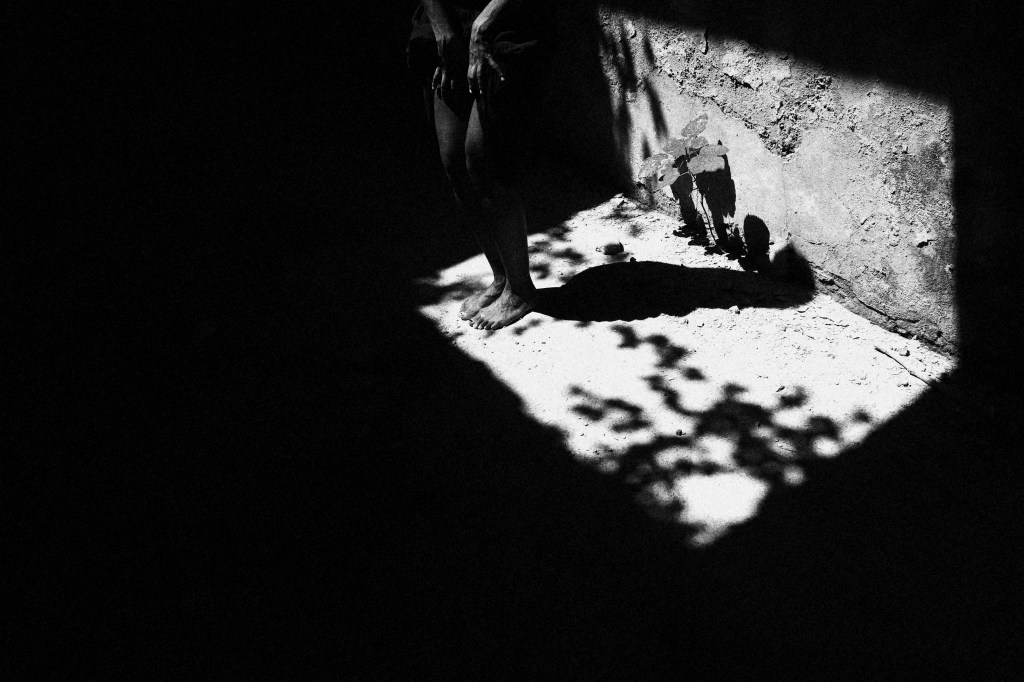
As ideology petrifies in architectural territories, its conception of history-present-future too becomes encoded in spatial territories. When the live, attentive and improvisational body – the phenomenological agent – encounters this territory, an Interval is begun: a multiplicity of futures manifest in the tensile and reflexive passage of a body leaking through space-time.
An Interval represents the potential of an embodied in-betweenness, where experiments in spatial and temporal arrangements form possibilities of alternate futures. The unfolding of Intervals can be seen as a mode of inhabitation – a subversion of the containment imposed by patriarchal paradigms and their architectures of excess.(1)
In practice, it commences as the urge to turn toward or away from certain spatial territories: we invisibilise the infrastructure of post-industrial suburbia; glorify the relics of fallen empires; exotify the debris of war; sanctify temples that have endured over millennia. In each of these urges lies a cycle of mutual affect between body and territory that we can – through a plurality of interventions – reaffirm, subvert, renegotiate, or subject to ambiguity.
It is also through the Interval that we can delineate a proxemic of alterity. Just as it is a living body that territorializes according to its need and interest, so too can it act to deterritorialize. Elizabeth Grosz, building on Luce Irigaray, notes that the Interval is where the phenomenological body works to conjoin chaos to territory, affecting a “breaking up systems of enclosure and performance, traversing territory in order to retouch chaos, enabling something mad, asystematic, something of the chaotic outside to reassert and restore itself in and through the body, through works and events that impact the body”.(2)
The Interval therefore denotes a liminal space of becomingness. An access point, a coming face-to-face with the Other in its dilated entirety, allowing for a tearing away at the integrity of those meanings that seem fixed, assured and ideal. Jacques Derrida articulates this as neither clearly space nor time, but a kind of leakage between the two: “the becoming-space of time or the becoming-time of space.” (3) A multiplicity is recognised – infinite passages into territories which do not yet exist and hence cannot be fathomed. In some instances, an utterance is found; a manifestation of haunting temporalities actualised in physical representation.
- Elizabeth Grosz, Architecture from the Outside: Essays on Virtual and Real Space (The MIT Press Cambridge, Massachusetts; London, 2001).
- Elizaebth Grosz, Chaos, Territory, Art (Columbia University Press, Columbia, 2008), 18.
- Jacques Derrida, Margins of Philosophy (University of Chicago Press, 1982), 13.
 THE THIRD THING